7 October 2026 Dawid Drej
Are you organizing a school trip to Gdańsk? Here's a ready-made plan for touring the Old Town of Gdańsk.
How to plan a route that will delight both students and chaperones? We've prepared a unique idea for engaging the group that combines fun with learning about the city. Here's our plan for exploring Gdańsk!

Organizing a school trip is quite a challenge. Young people can be demanding, and after all, we care most about showing students something more than just boring dates and facts from a textbook. We want the trip to be full of emotions, beautiful views, and unique experiences that will stay in their memory for a long time. Here is a way to present Gdańsk in a completely unique and unrepeatable way!
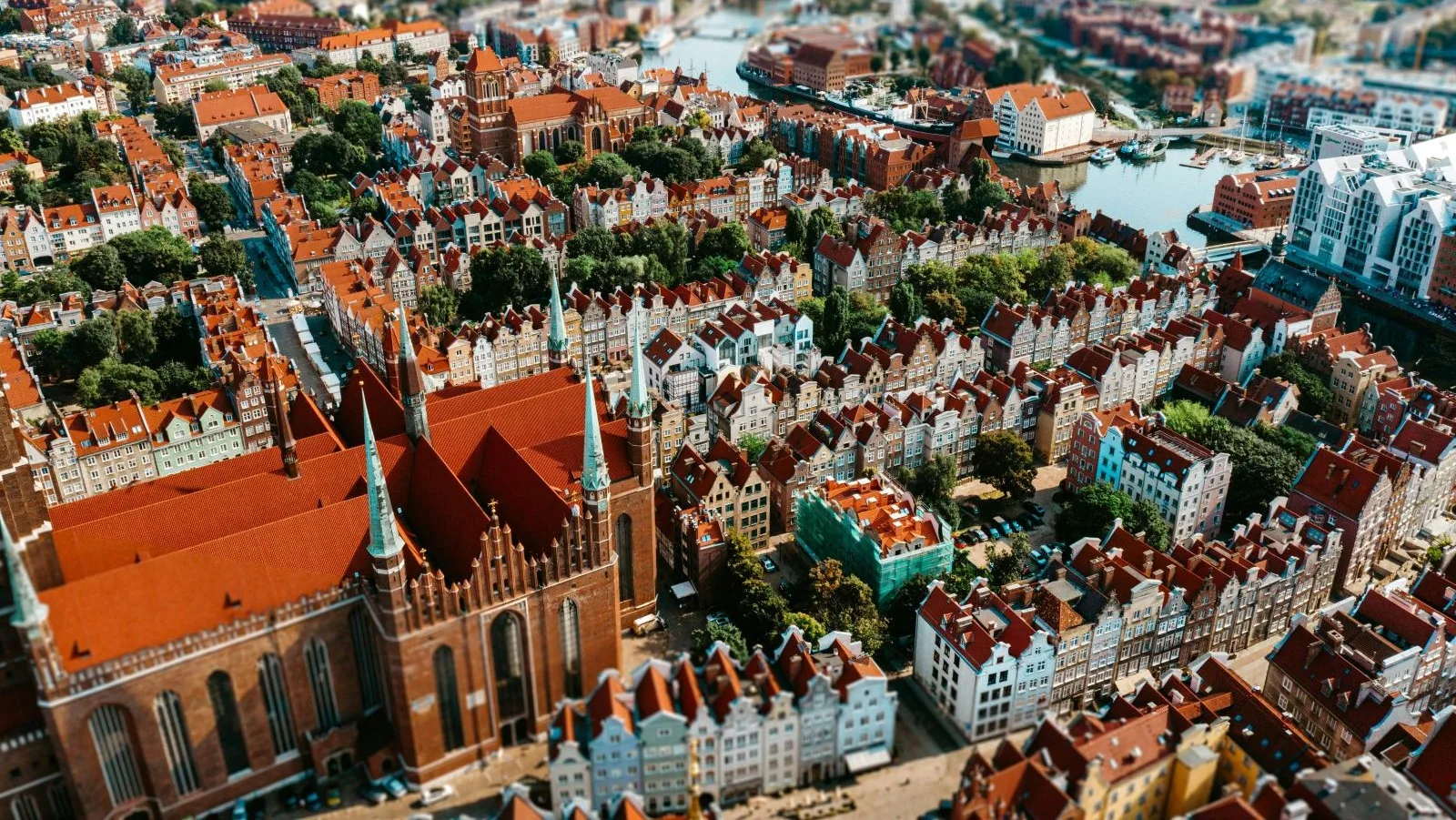
Discover the Royal Route: Długa Street and Długi Targ (but in the form of a city game!)
You cannot be in Gdańsk and not take a stroll down Długa Street and Długi Targ (Long Market). Since it is the absolute heart of the city, it is worth starting the trip from this very point. However, instead of a traditional, slow walk behind a guide, offer your students a unique way to discover the Gdańsk Old Town, namely: a city game! The Royal Route is a true treasure trove of architectural details. Divide the class into groups and give them the following tasks to complete. Discover the unique secrets of the Gdańsk Old Town together with them. The city game will consist of 10 points. Each of them hides a different interesting fact about the place where it is located.
Attributes of virtues on the Golden Gate (ul. Długa 1): The gate opening Długa Street is topped with sculptures. From the side of Długa Street, they symbolize four virtues: Prudence, Piety, Justice, and Concord. Game participants can match the sculpted attributes (e.g., a sword, scales, a book) to the corresponding values.
Game question: Look closely at the figures on top of the Golden Gate from the Długa Street side (they symbolize the virtues: Prudence, Piety, Justice, Concord). Name at least three items (attributes) that these figures hold in their hands.
A gallery of monsters, or Gdańsk gargoyles: Długa Street and Długi Targ are full of decorative gutter ends designed to drain water away from the facades. They take the forms of dragons, gargoyles, fantastic fish, and sea monsters. Teams can be tasked with finding and photographing the most spooky or unusual gargoyles along the route.
Game question: While strolling along Długa Street, look up at the gutters of the tenement houses. They end in so-called "gargoyles". Find the one that you think looks the scariest, briefly describe its appearance, and provide the number of the tenement house where it is located.
The Golden Pelican feeding its young (ul. Długa 35): At the top of the Lion and Pelican Tenement House, there is a golden bird figure. Students must spot it. To expand on the topic, you can satisfy the students' curiosity by adding that in medieval symbolism, a pelican tearing its own breast to feed its young with blood was the ultimate symbol of sacrifice.
Game question: Find the Lion and Pelican Tenement House. At its top, there is a golden bird figure. Look closely at it and write down what exactly the pelican is doing with its own breast.
The unusual gaze of the lions on the Main Town Hall: Unlike the official coat of arms of Gdańsk, the lions supporting the shield above the main entrance portal do not look at each other. Both turn their heads towards the Golden Gate. According to legend, they were supposed to look out for the Polish king arriving in the city this way.
Game question: Pay attention to the stone coat of arms of Gdańsk above the main entrance to the Town Hall. It is supported by two lions. Look at the direction their heads are turned and write down which way down Długa Street they are looking.
A sundial with a dark maxim (Main Town Hall): On the corner of the Town Hall, there is a 16th-century sundial. Students must find the Latin maxim engraved on it: Umbra sunt dies nostri, which translates to: "Our days are like a shadow."
Game question: On the corner of the Main Town Hall is an old sundial. Find the short Latin maxim engraved on it (hint: it starts with the word Umbra). Write it down exactly here and provide its meaning.
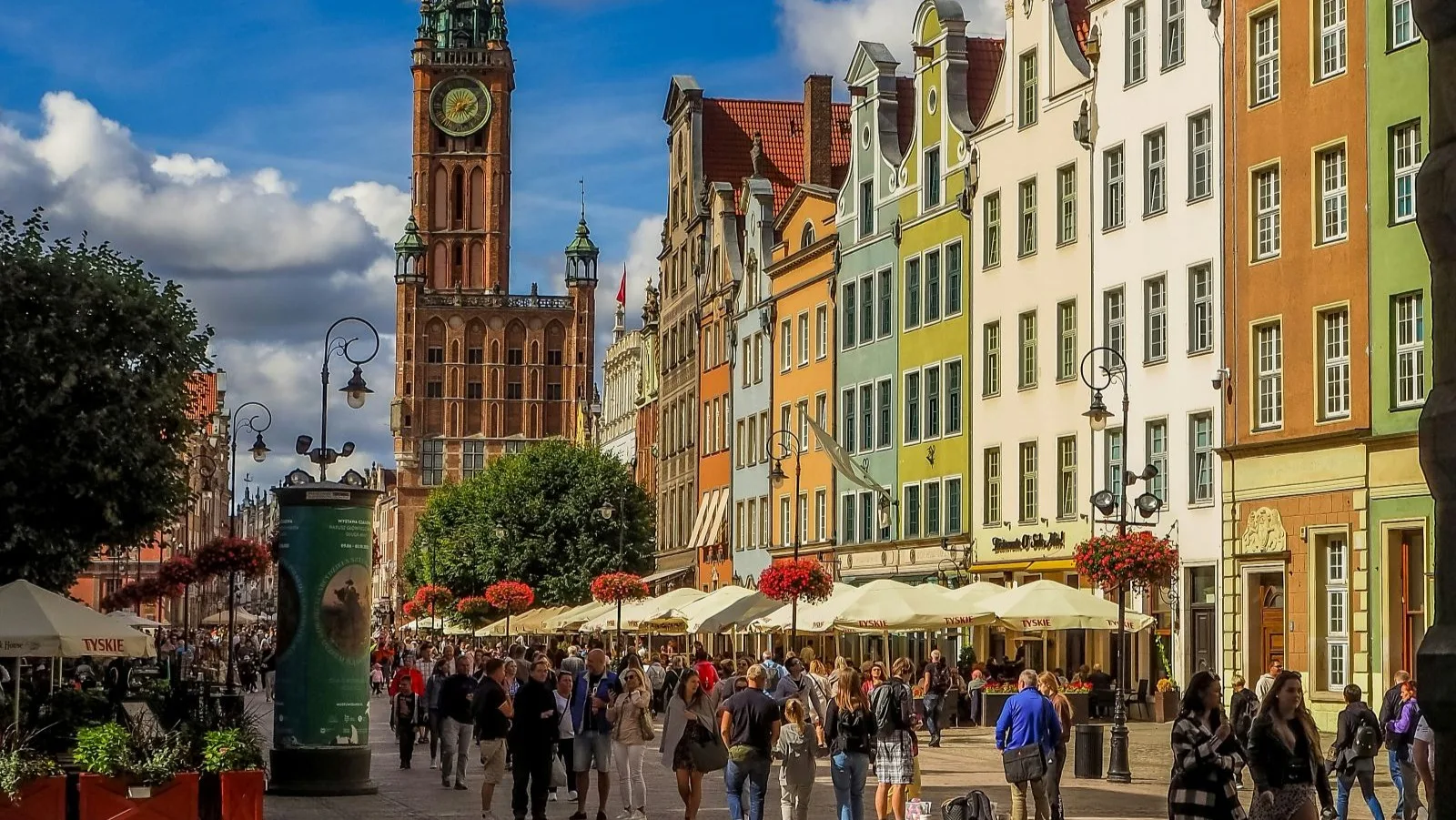
Royal busts on the Golden House (Długi Targ 41): Also known as the Steffens House, its facade hides a wealth of sculptures. The observational task is to find the busts of prominent commanders and rulers. Our suggestion is to count these busts, but you can also ask the more inquisitive ones, for example, for a photo of King Sigismund III Vasa.
Game question: You are standing in front of the most beautifully decorated tenement house on Długi Targ, called the Golden House. Among its rich, golden decorations are hidden busts (heads) of great rulers and commanders. Count them carefully and provide their total number.
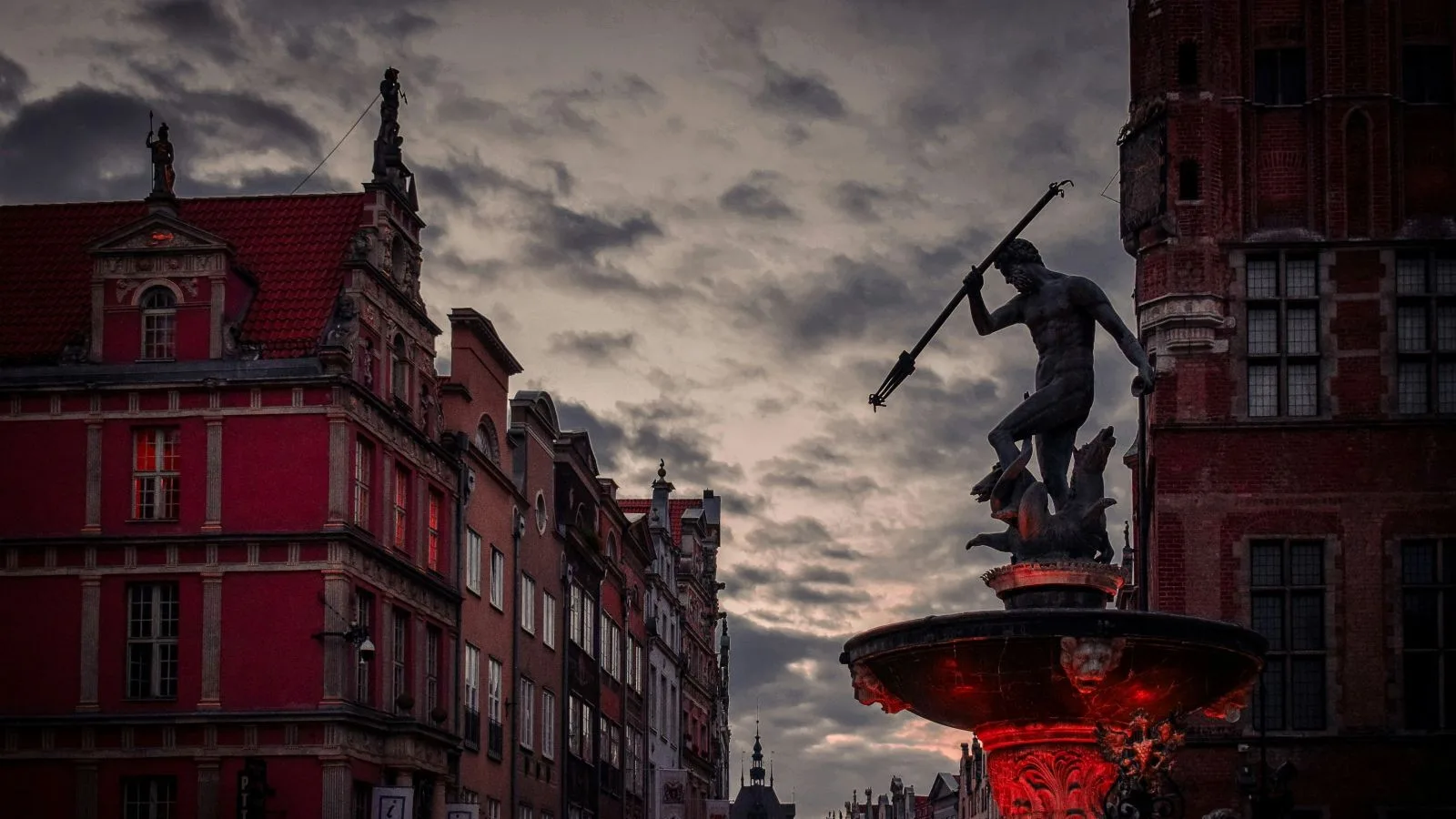
Neptune's fig leaf (Długi Targ): Although the famous statue of the god of the seas has stood in Gdańsk since 1633, it did not always look the same. A bronze fig leaf covering Neptune's private parts was added relatively recently – during a renovation in 1988. The task in the game could be to point out what this element is.
Game question: The famous statue of the god of the seas, Neptune, hides a certain bronze detail that was added relatively recently, during a renovation in 1988. What is this detail?
Fahrenheit's meteorological column (Długi Targ): In front of Artus Court stands a stylized display case housing a thermometer and a barometer. It reminds us that Daniel Gabriel Fahrenheit was born in Gdańsk. The students' task could be to read the current temperature on the Fahrenheit scale and convert it to degrees Celsius.
Game question: In front of Artus Court stands a special display case – it is a meteorological column commemorating the inventor of the Fahrenheit scale, who was born in Gdańsk. Read from it and write down the exact temperature currently in Gdańsk.
Medallions of Polish kings on Artus Court (Długi Targ 44): On the facade of the building where the wealthiest merchants and patricians used to meet, there are hidden bas-reliefs with profiles of Polish rulers (including Casimir IV Jagiellon, Sigismund I the Old, and Sigismund II Augustus). The aim of the game could be to recognize them.
Game question: Look closely at the facade of Artus Court. In its lower part, on both sides of the stairs, there are round medallions (bas-reliefs) depicting the profiles of important historical figures. Who do they represent?
"The Lady from the Window" (New House of the Bench, Długi Targ 43): Every day at 1:03 PM, a mechanical figure of a 17th-century Gdańsk woman looks out from the gable window of the tenement house adjacent to Artus Court. In the city game, participants may be tasked with locating exactly this one window on the richly decorated facade.
Game question: The tenement house adjacent to Artus Court is the New House of the Bench. At 1:03 PM, a mechanical figure of a Gdańsk woman looks out of one of its windows. Locate this window and describe its exact position (e.g., on which floor and on which side it is located).
Concert hall "I like Chopin"
For the perfect end to an intense day, we propose something that will calm emotions, awaken sensitivity, and show students that high culture doesn't have to be stiff and boring. We are talking about our "I like Chopin" concert hall, located at 4C Rajska Street, just 5 minutes from the Royal Route.
Our concept is something completely different from traditional, grand philharmonics. We offer an intimate hall with only 50 seats, where we break down the stiffness and distance known from standard concert halls. During the performance, the audience sits very close, almost within arm's reach of the instrument surrounded by over 400 candles. Such an atmosphere gives our events a very unique and intimate character.
To cater to the diverse tastes of school trips, we propose a varied repertoire. Here is what we play in our hall:
I like Chopin: This is no ordinary recital, but a musical journey through the history and life of Frédéric Chopin. Listeners can discover his earliest works, which he wrote under the influence of Polish folklore at the age of just 7. Then we move on to his Parisian period, where his work took on a deeper and more dramatic expression, right up to the brilliant masterpieces from the final years of his life.
I like Queen: This repertoire goes beyond classical music and serves as a tribute to famous popular music. Virtuoso performances of the greatest hits by the legendary band Queen are combined with the story of the life and dilemmas of Freddie Mercury: his struggles with sexual identity, loneliness, and the whirlwind of nightlife. This concert is intended for mature youth.
Musical Lands: This is a special, interactive program for the youngest audience, up to 12 years old. This format is highly accessible and perfectly tailored to the perception of younger children. During the concert, we will learn what rhythm is, what role a conductor plays in an orchestra, and we will even face off in a musical duel!

A trip to Gdańsk can combine movement and fun with a connection to high culture and classical music. Including an intimate concert surrounded by hundreds of candles in the trip itinerary will certainly be a surprise for the students that they will remember for a long time. Especially since, as part of our offer for schools, we organize private concerts just for your group, starting from 30 PLN per person! More information can be found in the "For Schools" tab.